Showing posts with label Amazing Facts. Show all posts

Thursday, 19 July 2012

Does Proper Spelling Still Matter?


Spelling Errors

"I before e, except after c." If you've ever repeated this rhyme to yourself, you know all about the mental spell-check required before sending out messages. But these days, spelling has become shorter and more laconic, as we find ourselves using 'u,' 'ur' and depending on auto-correct.
But this doesn't mean we should put our heavy dictionaries away -- the benefits of spelling are endless. ""Correct spelling, indeed, is one of the arts that are far more esteemed by schoolma'ams than by practical men, neck-deep in the heat and agony of the world." -- Henry Louis Mencken, The American Language.


But what about when we age, does it really matter? We are shortening our conversation as much as we can. Instead, some people are so reluctant about typing that somehow they make their spellings look so worst that the reader gets frustrated. You're more likely to type 'min' instead of minute or say ATM as opposed to automated teller machine in a conversation.
"Spellings in standard form enables readers to understand writing, to aid communication and ensure clarity. Period. There is no additional reason, other than affectation, for spelling rules.Electronic media like smart phones,computers,mobiles are igniting the adoption of more casual way of communication -- texting is closer to speech than letter writing," says Anne Trubek, an associate professor at Oberlin College in an article for Wired Magazine.
Sometimes, spelling errors don't always make you look so causal. In May, Republican presidential candidate Mitt Romney had a misspelling experience when hiscampaign's iPhone application spelled 'America' as 'Amercia,' according to USA Today. And then of course, there was Dan Quayle's famous problemwith potatoes, which has probably helped an entire generation remember how to spell the plural form of the word.
Misspellings may be due to lack of knowledge of spellings or may be unknowingly. So here is a list of 30 most common misspelled words I've come across.

Youth Prefers Texting !!!


Texting Dominates As Teens And Young Adults Make Fewer Phone Calls


Kids, you've heard of phone calls, right? Did you know that there's an app on your smartphone that lets you talk out loud to family and friends? Ask your grandparents about it.
We're being facetious, but it's true that the stereotype of a chatty teen or young adult spending hours talking on the phone is fading. Those interactions are being replaced by the image of a kid hunched over a handset, tapping out texts, emails, or Facebook messages.
Two new pieces of research highlight just how common that image has become.
A British study conducted by independent media regulator Ofcom found that among 16- to 24-year-olds, phone calls are being superseded by texts or other e-messages. Per the research, 96 percent use some form of text-based communication -- either though social networks (73 percent) or through traditional texting (90 percent) -- on a daily basis. By comparison, only 67 percent of that age group talks on the phone daily. Overall, total time spent on the phone declined 5 percent for Britons of all ages, the first such drop since the 1990s, according to The Guardian.
And new research from Pew finds similar trends among teens stateside. As NBC News explains, 63 percent of teens text every day, compared to only 39 percent making or taking cell phone calls daily. And it seems social networking (29 percent daily use) and instant messaging (22 percent) are increasingly taking up U.S. teens' time, too.
Taken together, these studies appear to foreshadow a time in the not-so-distant future when text-based messages are the norm and phone calls are thought of as a quaint, nonessential way to get in touch.
In fact, that day may come sooner than you think, if the chief executive of one of the largest American phone carriers is to be believed. "I'll be surprised if, in the next 24 months, we don't see people in the market place with data-only plans," AT&T CEO Randall Stephenson said at a conference in June. "I just think that's inevitable."
Consider it the beginning of the end of the phone call as we know it, with teens leading the trend.


Wednesday, 18 July 2012

How Blind Photographers Like Chris Holmes Are Overcoming The Odds To Produce Stunning Images


At first it sounds almost like a oxymoron: if photography is the art of capturing a visual moment, how can someone who is blind be a successful photographer?
Yet a growing online community is full of examples of precisely that, as visually impaired snappers share their experiences of producing quality work against the odds.
But how, and why?
Chris Holmes became blind almost overnight at 14, due to a genetic eye disorder. A photographer since childhood, Holmes also happens to be one of Great Britain’s most successful Paralympic swimmers and a nine-times gold medalist.
chris holmes
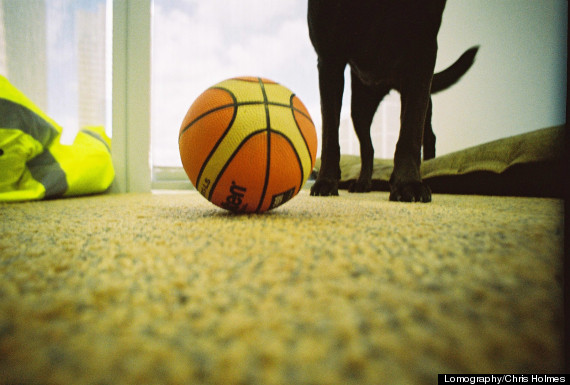
A photograph by Chris Holmes of his dog Lottie in his office, preparing for the Olympics.

“It’s always marvellous to think about what you can do with a camera, how you can capture the essence of a moment”, he says.
Holmes talks a lot about the importance of the “energy stored within a moment” - it’s clear that for him, photography’s ability to freeze time is what's most important.
“We got underwater cameras when I was in pre-games training camp ahead of the Sydney games. I was lying on the bottom of the pool. You really get that sense of a different angle, I wanted to capture what it really was to be a swimmer in training, preparing for the Olympics.”
Without sight, Holmes uses his awareness of light, emotion and experience to take a shot.
“The light you get in Australia was a really sharp, bright light. When I was underwater, that light was captured and refracted and I saw the swimmer coming over the top of me as I caught the shot. It just made such a beautiful image. It had a real sense of liquidity to it - an image of the swimmer at one with the water.”

chris holmes
Paralympian Holmes takes his own self-portrait
There may not be many other Paralympian blind photographers out there, but the wealth of groups on sites like Flickr show Holmes is not alone in being visually impaired and snap-happy.
Visually-impaired photographers in the UK and Blind Photographers are two online go-tos for people to discuss and share their work online.
The latter has over 300 members, all of whom subscribe to Blind Photography’s Group Rules - namely, introducing yourself and sharing your own story.
he photos are as good and as varied as you'd find in any other Flickr trawl. Of some 10,000 items, domesticated holiday snaps mix with impeccable nature shots and atmospheric sepia landscapes. There’s more braille than in other groups, but otherwise it’s near-impossible to tell these photos have been taken by people who are blind.
Reading through the site’s forums shows the scale of the impact groups like this can have - the nature of photographers’ visual impairment is no more relevant than the lenses they prefer or favourite subject matter.
A user called Renaessance, who takes photos of live performance art, posts saying the group is a blessing to find, after “often feeling like an anomaly growing up as a visually impaired kid who wanted to make art.”
Kim Parkinson undertook an art history degree before being registered visually impaired, she says her condition means she lives “in a beautifully abstracted and tonally biased world, a bit like my light documents.”
The group’s founder is Timothy O’Brien, a legally blind photographer who “started the group out of curiosity with little expectation.” Within weeks, Blind Photographers had several active members and continues to grow.

blind photography
The New York skyline, as shot by Chris Gampat, one of Blind Photography's members.
O' Brien says via email: “The community plays several positive roles. First and foremost, it is a source of support, both technical and personal, for members of the community. We can share experiences showing that challenges can be overcome and how.
"Secondly, we help the broader community understand what it means to be visually impaired and break the traditional stereotypes of blind people.”
This, it seems, is the nub: part of understanding blind photography is understanding the concept of blindness.
“Blindness, and visual impairment in general, encompasses a much wider spectrum of 'vision' than is generally understood," O’Brien explains.
"Some blind people have absolutely no sight, but many are able to perceive some visual information. I use my limited sight to build a mental image before I use the camera, a process I call stitching.
"Walking around the scene and interacting with the subject give me a feel for what the lens will see when I snap the shutter. So the major challenge for me is to make that mental image as accurate as possible so the camera can capture what I want it to.”
Blind photography may seem like a contradiction in terms, but for many, it’s as much of a hobby as if they had the benefit of sight. Commenting on the difference between using a camera before and after his blindness, Holmes says the intentions have always been the same: to try to catch essences, elements and moments.
Perhaps, it is the blind photographers that prove Dorothea Lange’s statement about the art true: The camera is an instrument that teaches people how to see without a camera - or, in this case, vision.


5 Tips To Stop Wasting Food And Start Saving Money


 I am guilty of letting some things “go” in my fridge. I don’t finish all my salad greens, so they wilt and I throw them out or I find blue fuzzy mold in the sour cream, so I toss it. A little waste here and there feels harmless, but I certainly wouldn’t ever throw dollar bills in the trash can and, in a roundabout way, that’s what I’m doing when I throw out rotten food.
I bet if I figured out how much food I wasted over the course of a year, I might be a little more aggressive about using it all up. The average American wastes more than 200 pounds of food a year -- that’s a lot of wasted dollars too! Here are a few tips that may help you and me stop wasting food and money:
1. Check expiration dates before you buy: This may seem like a no-brainer, but often you’ll find varying expiration dates on identical products. Stores use expiration dates to indicate freshness, moving the newer products to the back of the shelf with the older ones within grabbing distance. If you want the ultimate in freshness, check the products behind what’s directly in front of you -- you may find fresher ones hidden there.
2. At the meat counter ask for the freshest cuts: The meat behind the counter may look good (and chances are it probably is), but you can’t tell by looking how long it has been on display. You could ask the butcher how long it’s been there or you could ask for a fresher cut from the back. Your eyes and nose never lie -- meat starts to color after it’s been cut, so if beef looks dark or pork looks a little gray, avoid it and get another piece. It may be hard to smell if your meat is packaged, but if it has a strong odor, avoid it.
3. Store your food properly: Proper storage is key when it comes to making food last. Store raw meat in the meat drawer away from cooked food to avoid contamination and to keep the temperature consistently cold. Dairy items should be kept in the back of the fridge -- not on the door. Even dry goods don’t last forever. Canned and boxed foods are best kept in a cool, dark pantry away from heat; store things like nuts and whole-wheat flour in the fridge or freezer.
4. Inspect food before you buy it: Ever come home and wonder why you bought an apple with a bruise on it? Or bread or berries with fuzz growing on them? It’s because you were shopping on autopilot. Take some time to look at what you are buying. Giving it a once-over will help you avoid disappointment (and save you time rebuying or returning the item) when you find flaws after your purchase.
5. Make a date with your refrigerator: Once your food is home, keep tabs on it. Move your perishables in plain view so you know what you have. Check the fridge before you go to the grocery store so you don’t purchase something new that you already have. Pick a day of the week to go through your fridge and see what’s in there and try to plan your meals around the stuff that’s nearing its expiration date.

How Closely Do You Need to Follow Food Expiration Dates?


Do food expiration dates really mean anything?
Some people have a fear of snakes. Others are afraid of heights. For me, it’s spoiled food. I’m not claiming that this fear of mine is at all rational, but do I really need to be concerned?
There comes a time when everyone has to face their fears. And that’s going to start with a little digging into expiration dates. Do I really need to throw food away by the date printed on the carton? If not, how long do I have before it really goes bad? And what does “going bad” really mean? Is it unsafe?
Here’s what I found that may surprise you:
1) Expiration dates aren’t required
I assumed that there is a regulatory process involved with expiration dates—hard and fast rules. This is not the case. According to the USDA, there is “no uniform or universally accepted system used for food dating in the United States,” although some states do require it, and there are dating regulations when it comes to infant formula.
2) Different dates have different meanings
“Sell-by” “Best if used by” and “use-by” have similar, but slightly different meanings. “Sell-by” is geared more toward the retailer, indicating to them when they should rotate product off the shelves. “Best if used by” is an indicator of quality (the food will not be “bad” after that date) and “use-by” is the last day the manufacturer recommends using the product based on quality, not safety.
3) How long will my food last if it goes past the expiration date?
That depends on what it is and how it was handled. The USDA recommends using products that display the “use-by date” by that time. For sell-by dates that go past at home, you can continue to store the food for a short amount of time depending on what it is. Some common products are: ground meat and poultry (1-2 days past the date), beef (3-5 days past the date), eggs (3-5 weeks past the date).
4) Could food lose its nutritional value before it’s expired?
That depends on the food. Take orange juice, for example. One cup of OJ can offer a full day’s dose of vitamin C. But after it’s been open for a week, it loses all antioxidant benefits from exposure to air and light. (And that could happen even before it reaches its expiration date.) 
 5) Is food safe after it expires?
Expiration dates refer to quality, not safety. For example, if a refrigerated product was kept below 40 degrees and was well packaged and handled, it may look and smell a little funny, but would not necessarily be considered unsafe. If it was left out on a warm counter for hours or contaminated by something else, it may harbor harmful bacteria that could cause food-borne illness. (Perishable foods should never be thawed on the counter for longer than 2 hours because, while the center of the food may remain frozen, the outer surface may enter the Danger Zone, the range of temperatures between 40° and 140°F, in which bacteria multiply rapidly.) For this same reason, you should never eat meat, poultry, eggs or sliced fresh fruits and vegetables that have been left out for more than 2 hours (1 hour in temperatures hotter than 90°F). But this could happen to any food and is not related to expiration dates.

5 Vegetables You Shouldn’t Keep in Your Refrigerator

1. Tomatoes
 Tomatoes
OK, a tomato is technically a fruit, but taste-wise, it’s closer to a vegetable. If you’ve ever grown tomatoes, then you know that they love the heat and hate the cold. Turns out even after they’re plucked from the vine, they still hold their aversion to cold. The fridge is not the ideal place to store tomatoes. Store them there and your perfect tomatoes turn into a mealy disappointment. They’ll still be good for cooking, but not the best for eating fresh. Instead store them on your counter (not in direct sunlight) and enjoy them when they’re ripe.

2. Basil                                    

BasilTomatoes and basil go well together on your plate and it turns out they have similar needs in the storage department too. Like tomatoes, basil loves the heat, so extended periods of time in a cold environment like a refrigerator causes it to wilt prematurely. Basil will do best if it’s stored on your counter and treated as you would fresh cut-flowers. A fresh bunch of basil can be stored for in a cup of water (change it every day or two) away from direct sunlight. Covering it loosely with a plastic bag will help keep it moist (but make sure the bag has an opening to allow for some fresh air to seep in).

Potatoes3. Potatoes  

Potatoes like cool, not cold temperatures. They do best at around 45 degrees F, which is about 10 degrees warmer than the average refrigerator. Most of us don’t have a root cellar (a cool, dark place to store root vegetables like potatoes), so keeping them in a paper bag in a coolish spot (like a pantry) is best. Why paper? It’s more breathable then plastic so potatoes won’t succumb to rot as easily. And why not the fridge? Storing potatoes at cold temperatures converts their starch to sugar more quickly, which can affect the flavor, texture and the way they cook

4. Onions  

OnionsOnions don’t come out of the ground with that protective papery skin. To develop and keep that dry outer layer, they need to be “cured” and kept in a dry environment like a pantry, which is not as damp as the refrigerator. Also, lack of air circulation will cause onions to spoil, as will storing them near potatoes, which give off moisture and gas that can cause onions to spoil quickly. Store onions in a cool, dry, dark, well-ventilated place. (Light can cause the onions to become bitter.) Scallions and chives, however, have a higher water content, bruise more easily and have a shorter shelf life, so store these alliums in the fridge.

5. Avocados  

Avocados don’t start to ripen until after they’re picked from the tree. If you’re buying a rock-hard avocado, don’t store it in your refrigerator, as it slows the ripening process. On the other hand, if you have a perfectly ripe avocado that you’re not ready to use, storing it in the refrigerator may work to your advantage by prolonging your window of opportunity to use it before it becomes overripe. So the bottom line on storing avocados is store hard, unripe avocados on your counter and store ripe avocados in your refrigerator if you’re not going to eat them right away.

10 Rules for a Healthy, Safe Kitchen


1. Use a “refrigerator thermometer” to keep your food stored at a safe temperature (below 40°F).

Cold temperatures slow the growth of bacteria. Ensuring that your refrigerator temperature stays at 40°F or colder is one of the most effective ways to reduce your risk of foodborne illness. You can buy a “refrigerator/freezer thermometer” at appliance stores, home centers (e.g., Home Depot) and kitchen stores—including online ones, such as cooking.com.

2. Defrost food in the refrigerator, the microwave or in cold water, never on the counter.

Perishable foods should never be thawed on the counter for longer than 2 hours because, while the center of the food may remain frozen, the outer surface may enter the Danger Zone, the range of temperatures between 40° and 140°F, in which bacteria multiply rapidly. If you’re short on time, use the microwave—or you can thaw meat and poultry in airtight packaging in cold water. Change the water every half hour (so it stays cold) and use the thawed food immediately.

3. Always use separate cutting boards for raw meat/poultry/fish and produce/cooked foods.

Bacteria from uncooked meat, poultry and fish can contaminate cooked foods and fresh produce. An important way to reduce this risk is to use separate cutting boards for raw meat/poultry/fish and produce/cooked foods.

4. Always cook meat to proper temperatures, using a calibrated instant-read thermometer to make sure.

One effective way to prevent illness is to use a food thermometer to check the internal temperature of meat, poultry and egg dishes. The USDA Recommended Safe Minimum Internal Temperatures are as follows: beef, veal and lamb (steaks and roasts), fish, 145°F; pork and ground beef, 160°F; poultry, 165°F. In the EatingWell Test Kitchen we often recommend cooking meats like roasts and steaks to lower temperatures, closer to medium-rare, so that they retain their moisture. However, we recommend that those who are at high risk for developing foodborne illness—pregnant women and their unborn babies and newborns, young children, older adults, people with weakened immune systems or certain chronic illnesses—follow the USDA guidelines.

5. Avoid unpasteurized (“raw”) milk and cheeses made from unpasteurized milk that are aged less than 60 days.

Raw milk is milk from cows, sheep or goats that has not been pasteurized (heated to a very high temperature for a specific length of time) to kill harmful bacteria that may be present. These bacteria—which include salmonella, E. coli and listeria—can cause serious illness and sometimes even death. The bacteria in raw milk can be especially dangerous to pregnant women, children, the elderly and people with weakened immune systems. Raw-milk cheeses aged 60 days or longer are OK, since the salt and acidity of the cheesemaking process make for a hostile environment to pathogens.

6. Never eat “runny” eggs or foods, such as cookie dough, that contain raw eggs.

Even eggs that have clean, intact shells may be contaminated with salmonella, so it’s important to cook eggs thoroughly until both the yolk and the white are firm. Casseroles and other dishes containing eggs should be cooked to 160°F (use an instant-read food thermometer to check). In the EatingWell Test Kitchen, we don’t always recommend cooking eggs fully. However, we recommend that those who are at high risk for developing foodborne illness—pregnant women and their unborn babies and newborns, young children, older adults, people with weakened immune systems or certain chronic illnesses—follow the USDA guidelines. If you can’t resist runny eggs—or sampling cookie batter—use pasteurized eggs. They’re found near other eggs in large supermarkets.

7. Always wash your hands in warm soapy water for at least 20 seconds before handling food and after touching raw meat, poultry or eggs.

You can pick up a lot of bacteria out in the world, so it’s important to always wash your hands before you eat or prepare food. You should also wash your hands after touching any uncooked meat, poultry and fish or eggs, as bacteria from these foods can contaminate cooked foods and fresh produce. Use soap and warm water and wash thoroughly—for at least 20 seconds.

8. Always heat leftover foods to 165ºF.

The USDA recommends heating all cooked leftovers to 165°F in order to kill all potentially dangerous bacteria.

9. Never eat meat, poultry, eggs or sliced fresh fruits and vegetables that have been left out for more than 2 hours (1 hour in temperatures hotter than 90°F).

If you leave perishable foods out of the refrigerator or freezer for more than 2 hours they may enter the Danger Zone—the unsafe temperatures between 40° and 140°F, in which bacteria multiply rapidly.

10. Whenever there’s a food recall, check products stored at home to make sure they are safe.

You should discard any food that’s been recalled because it’s associated with the outbreak of a foodborne illness. But according to a survey conducted by Rutgers University during the fall of 2008, only about 60 percent of Americans search their homes for foods that have been recalled because of contamination.

Which Milk Is Best to Buy?


As surprising as it may seem, considering I’m a dietitian and nutrition editor of EatingWell Magazine, my preferred variety of milk is the chocolate kind, especially after a workout. It delivers the mix of protein and carbohydrate our bodies need to recover energy supplies after an intense workout.
But at the grocery store, my choices don’t just stop at plain versus chocolate milk. There’s also fat content to consider and milk labeled organic, RBST-free and lactose-free. And beyond the grocery store, there’s the raw milk versus pasteurized milk debate. With so many choices, how do you know which one you should buy? This guide will help you cut through the confusion.
      Whole milk, reduced-fat milk, low-fat milk or nonfat milk?
Consider whole milk—which delivers 150 calories and 8 grams fat (5 grams saturated) per cup—a once-in-a-while treat. Nutrition experts recommend drinking low-fat (1%) milk (100 calories, 2.5 grams fat) or nonfat milk (80 calories, 0.5 gram fat) to limit intake of the saturated fats that boost risk of heart disease. Infants under age 2, however, who need extra fat to support a developing brain, should drink whole milk.
And don’t be fooled: reduced-fat (2%) milk is not a low-fat food. One cup has 5 grams fat, 3 of them the saturated kind. You won’t miss out on milk’s nutritional boons when you opt for low-fat or nonfat milk (sometimes called “skim”): per cup, all varieties deliver about one-third of the recommended daily value for calcium and at least 20 percent of the daily value for riboflavin, phosphorus and vitamin D.


Organic or not?
Polls suggest people associate organic milk with superior nutrition, better treatment of animals and a healthier planet. But there’s no evidence that organic milk is more nutritious. While preliminary research has suggested that grass-fed cows produce milk with more vitamin E and heart-healthy omega-3 fats than cows fed grains, organic standards don't require that cows be solely grass-fed. (Farmers must use organic fertilizers and pesticides and may not give cows preventive antibiotics or supplemental growth hormones; animals must have access to the outdoors year-round and at least 120 days per year of grazing.)

rBST-free or not?

The claim “rBST-free” indicates milk produced without using the artificial growth hormone recombinant bovine somatotropin, or rBST. Giving this hormone to a cow boosts its milk production by about five quarts per day. Some consumers believe that treating cows with the supplemental hormone is inhumane, but the Food and Drug Administration (FDA) maintains that treating cows with rBST does not harm the animals—or significantly affect the hormone content of milk. In fact, all milks—even from cows not treated with rBST—contain naturally-occurring hormones. Note: All organic milks are rBST-free, but not all rBST-free milks are organic (i.e., farmers may use pesticides, fertilizers, etc.).


Lactose-free?

This type of milk is basically regular cow’s milk minus lactose, the natural sugar in milk. It provides all the same healthful nutrients (e.g., protein and calcium), just not the sugar that stokes digestive problems for up to 50 million Americans.


Raw vs. pasteurized?

During pasteurization, milk is heated to high temperatures (>161°F) then rapidly cooled to kill harmful bacteria, including salmonella, E.coli 0157:H7 and listeria. While raw-milk enthusiasts claim heating milk destroys its natural enzymes and beneficial bacteria, studies show that the nutritional differences between pasteurized and raw milk are slight. What’s more, public health experts warn that drinking raw milk is like playing Russian roulette. In fact, the Centers for Disease Control and Prevention reported that raw milk accounted for 1,007 illnesses and two deaths between 1998 and 2005. And when USDA scientists collected raw milk samples from 861 farms in 21 states, nearly a quarter of them contained bacteria linked to human illness, including 5 percent that tested positive for Listeria—a bacterium that results in a foodborne illness, listeriosis, and has a 30 percent mortality rate.

Ramadan 2012: History, Dates, Greeting And Rules Of The Muslim Fast


What is the history of Ramadan?
Ramadan is the 9th month of the Arabian calendar. The term Ramadan literally means scorching in Arabic. It was established as a Holy Month for Muslims after the Quran was revealed to the Prophet Muhammad in 610 CE on the occasion known as Laylat al-Qadr, frequently translated as "the Night of Power.
Observance of Ramadan is mandated in the Quran, Surah 2, Ayah 185

“The month of Ramadhan [is that] in which was revealed the Qur'an, guidance for the people and clear proofs of guidance and criterion. So whoever sights [the new moon of] the month, let him fast it; and whoever is ill or on a journey - then an equal number of other days. Allah intends for you ease and does not intend for you hardship and [wants] for you to complete the period and to glorify Allah for that [to] which He has guided you; and perhaps you will be grateful.”

What are the dates of Ramadan?
Because the cycle of the lunar calendar does not match the solar calendar, the dates of Ramadan shifts by approximately 11 days each year. In 2011, Ramadan began on August 1st. In 2012 Ramadan is likely to begin on July 20th.
The ending of Ramadan is marked by the holiday of Eid ul-Fitr, which takes place either 29 or 30 days after the beginning of the month. On Eid ul-Fitr, morning prayers are followed by feasting and celebration among family and friends. This year Eid ul-Fitr will most probably fall on Sunday, August 19th.
What are the daily fasting requirements?
During the month of Ramadan, most Muslims fast from dawn to sunset with no food or water. Before sunrise many Muslims have the Suhur or predawn meal. At sunset families and friends gather for Iftar which is the meal eaten by Muslims to break the fast. Many Muslims begin the meal by eating dates as the Prophet used to do.
This ritual fast known as, Sawm, is one of the five pillars of Islam, and requires that individuals abstain from eating, drinking, smoking and sexual intercourse.
To find the specific times for Ramadan fasting, click over to this helpful tool provided by IslamiCity that allows you to calculate prayer schedules -- including sunup and sundown -- by entering your city or zip code.
What are the expectations towards charity?
Charity is an important part of Ramadan. The fast emphasizes self-sacrifice and using the experience of hunger to grow in empathy with the hungry. During Ramadan, Muslim communities work together to raise money for the poor, donate clothes and food, and hold iftar dinners for the less fortunate.
What scriptural study do Muslims take part in?
Many Muslims use Ramadan to read the entire Quran or read the Quran daily. Many communities divide the Quran into daily reading segments that conclude on Eid ul-Fitr at the end of Ramadan.
Can non-Muslims participate?
Non-Muslims are free to participate in Ramadam. Many non-Muslims fast and even pray with their Muslim friends or family members. Non-Muslims are often invited to attend prayer and iftar dinners.
Those wishing to be polite to someone who is fasting for Ramadan may greet them with Ramadan Mubarak or Ramadan Kareem, which mean Have a Blessed or Generous Ramadan.
Should Muslims with diabetes fast?
Fasting during Ramadan is discouraged for patients with diabetes by the American Diabetes Association.
“In keeping with this, a large epidemiological study conducted in 13 Islamic countries on 12,243 individuals with diabetes who fasted during Ramadan showed a high rate of acute complications.”
However, the study says this was not conclusive. Many diabetic patients fasted with no complications. Patients with diabetes should work with their doctors to figure out a strategy if they choose to fast.

What is the 'goal' of Ramadan?
In general, the practices of Ramadan are meant to purify oneself from thoughts and deeds which are counter to Islam. By removing material desires, one is able to focus fully on devotion and service to God. Many Muslims go beyond the physical ritual of fasting and attempt to purge themselves of impure thoughts and motivations such as anger, cursing, and greed.
Do all Muslims take part in Ramadan fasting?
Most Muslims believe Ramadan fasting is mandatory, but there are some groups that do not. Pregnant or breastfeeding mothers, people who are seriously sick, travelers, or those at health risk should not fast. Children that have not gone through puberty are also not required to fast during the month Ramadan.

Monday, 16 July 2012

Amazing Facts - Weird Facts - Interesting Facts


The Mona Lisa has no eyebrows. It was the fashion in Renaissance Florence to shave them off!

Every day 20 banks are robbed. The average take is $2,500!

The most popular first name in the world is Muhammad!

Tablecloths were originally meant to be served as towels with which dinner guests could wipe their hands and faces after eating!

Tourists visiting Iceland should know that tipping at a restaurant is considered an insult!

One car out of every 230 made was stolen last year! 

The names of Popeye's four nephews are Pipeye, Peepeye, Pupeye, and Poopeye!

Until the nineteenth century, solid blocks of tea were used as money in Siberia!

The Nobel Peace Prize medal depicts three naked men with their hands on each other's shoulders!

When glass breaks, the cracks move faster than 3,000 miles per hour. To photograph the event, a camera must shoot at a millionth of a second!

A Boeing 747 airliner holds 57,285 gallons of fuel!

A car uses 1.6 ounces of gas idling for one minute. Half an ounce is used to start the average automobile!

Saturday mail delivery in Canada was eliminated by Canada Post on February 1, 1969!

In Tokyo, a bicycle is faster than a car for most trips of less than 50 minutes!

There are 18 different animal shapes in the Animal Crackers cookie zoo!

Should there be a crash, Prince Charles and Prince William never travel on the same airplane as a precaution!


Your body is creating and killing 15 million red blood cells per second!

The king of hearts is the only king without a moustache on a standard playing card!

There are no clocks in Las Vegas gambling casinos! 

There is one slot machine in Las Vegas for every eight inhabitants!

The Philadelphia mint produces 26 million pennies per day! 

A lightning bolt generates temperatures five times hotter than those found at the sun's surface!

A violin contains about 70 separate pieces of wood!

It is estimated that 4 million "junk" telephone calls, phone solicitations by persons or programmed machine are made every day in the United States! 

It takes glass one million years to decompose, which means it never wears out and can be recycled an infinite amount of times!

Forest fires move faster uphill than downhill!

Almost half the newspapers in the world are published in the United States and Canada! 

The two-foot long bird called a Kea that lives in New Zealand likes to eat the strips of rubber around car windows!

Most lipstick contains fish scales!

Skepticisms is the longest word that alternates hands when typing!

One ragweed plant can release as many as one billion grains of pollen!

It's illegal to drink beer out of a bucket while you're sitting on a curb in St. Louis!


The first product to have a bar code was Wrigleys gum! 


No piece of square dry paper can be folded more than 7 times in half!

A group of geese on the ground is a gaggle, a group of geese in the air is a skein!

Over 2500 left handed people a year are killed from using products made for right handed people!

There are more than 10 million bricks in the Empire State Building!

If you counted 24 hours a day, it would take 31,688 years to reach one trillion!

Taphephobia is the fear of being buried alive!

A crocodile always grows new teeth to replace the old teeth! 

The sun is 330,330 times larger than the earth!

Clinophobia is the fear of beds!

A 'jiffy' is an actual unit of time for 1/100th of a second!

Porcupines float in water!

Pinocchio is Italian for "pine eye"!

The sentence "The quick brown fox jumps over a lazy dog." uses every letter of the alphabet!

The average life span of a major league baseball is 5-7 pitches!

The Mint once considered producing doughnut-shaped coins!

The only 15 letter word that can be spelled without repeating a letter is "uncopyrightable"!

The longest recorded flight of a chicken is 13 seconds!

The sloth (a mammal) moves so slowly that green algae can grow undisturbed on its fur!

Cat urine glows under a black-light!

The world's termites outweigh the world's humans 10 to 1!

The electric chair was invented by a dentist!

Windmills always turn counter-clockwise. Except for the windmills in Ireland!

A hedgehog's heart beats 300 times a minute on average!
Camels have three eyelids to protect themselves from blowing sand! 

The placement of a donkey's eyes in its head enables it to see all four feet at all times!

Human teeth are almost as hard as rocks!

A mole can dig a tunnel 300 feet long in just one night!

Ancient Egyptians slept on pillows made of stone!

A hippo can open its mouth wide enough to fit a 4 foot tall child inside!

A quarter has 119 grooves on its edge, a dime has one less groove!


Hummingbirds can weigh less than a penny!! 


Until 1796, there was a state in the United States called Franklin. Today it's known as Tennessee!

The Earth weighs around 6,600,000,000,000,000,000,000 tons (5,940 billion billion metric tons)!

A cockroach can live several weeks with its head cut off - it dies from starvation!

Every time you lick a stamp, you're consuming 1/10 of a calorie!

The average person has over 1,460 dreams a year! 

It's against the law to pawn your dentures in Las Vegas!

One in every 4 Americans has appeared on television!

The average American/Canadian will eat about 11.9 pounds of cereal per year!

It's against the law to burp, or sneeze in a certain church in Omaha, Nebraska!

you're born with 300 bones, but when you get to be an adult, you only have 206!

Human thigh bones are stronger than concrete!

Over 10,000 birds a year die from smashing into windows!

The state of Florida is bigger than England!

There are more than one million animal species on Earth!

In Natoma, Kansas, it's illegal to throw knives at men wearing striped suits

It was once against the law to have a pet dog in a city in Iceland! 

Your heart beats over 100,000 times a day!

Thomas Edison, lightbulb inventor, was afraid of the dark!